Seminar MCBT: Monday, 15th December 2025 at 2:00 pm
Sven Ingebrandt (Institute of Materials in Electrical Engineering, RWTH Aachen University)
Title: Coupling Neurons to Micro- and Nanoelectronic Devices
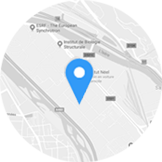
Institut Néel, Room E424 (Salle Louis Weil)
Abstract: Bioelectronic interfaces are increasingly capable of resolving complex neuronal and cellular dynamics relevant to electrophysiology and ion-channel research. Enhancing classical electrophysiology with Micro-electrode arrays (MEAs), advanced field-effect transistor (FET) architectures, nanostructured electrodes and nanowire devices enables sensitive detection of transmembrane fluxes, ligand responses, and pH-coupled transport or signaling.
The fundamental principles underlying the electronic and electrochemical coupling of the living cells can be investigated by a dual side configuration, where one cell is contacted by a patch-clamp pipette and a microelectronic device in parallel [1]. Detailed structural insights of the cell-substrate cleft geometry [2], membrane allocation [3], and ion-channel behavior from such experimental configurations was utilized for the interpretation and modelling of extracellular signals [4] and action-potential shapes recorded from MEAs or FETs [5].
The adhesion strength of cells on the devices and it particular electrochemical contact governs the electronic coupling and impedance in the contact area [6], which can be improved by nanowire structures [7] and by the utilization of conductive polymers such as poly(3,4-ethylenedioxythiophene) polystyrene sulfonate (PEDOT:PSS) [8].
Integrating these experimental and computational approaches supports the development of multimodal neuro-electronic platforms for high-resolution cellular physiology and hybrid bio-nanodevices. It can also used as a tool to understand transport properties of specific ion channel types in transfected cells and for the understanding of extracellular recordings with modern devices like organic electronics or 2-dimensional material devices.
This presentation will give an overview of this experimental technique.
References:
1. S. Ingebrandt, C.K. Yeung, M. Krause, A. Offenhäusser. Neuron-Transistor Coupling: Interpretation of individual extracellular recorded signals. European Biophysics Journal with Biophysics Letters, 2005, 34, 144-154.
2. G. Wrobel, M. Höller, F. Sommerhage, S. Ingebrandt, S. Dieluweit, H.-P. Bochem and A. Offenhäusser, Characterization of the cell-substrate contact by transmission electron microscopy, Journal of the Royal Society Interface, 2008, 5 (19), 213-222.
3. F. Sommerhage, R. Helpenstein, A. Rauf, G. Wrobel, A. Offenhäusser, S. Ingebrandt, Membrane allocation profiling: A method to characterize three-dimensional cell shape and attachment based on surface reconstruction, Biomaterials, 2008, 29 (29), 3927-3935.
4. M. Pabst, G. Wrobel, S. Ingebrandt, F. Sommerhage, A. Offenhäusser, Solution of the Poisson-Nernst-Planck equations in the cell-substrate interface, European Physical Journal E -Soft Matter, 2007, 24 (1), 1-8.
5. C.-K. Yeung, F. Sommerhage, G. Wrobel, A. Offenhäusser, M. Chan, S. Ingebrandt, Drug profiling using planar microelectrode arrays, Analytical and Bioanalytical Chemistry, 2007, 378, 2673-2680.
6. Z. Gao, S. Schäfer, R. Stockmann, B. Hoffmann, R. Merkel, A. Offenhäusser, S. Ingebrandt, Revealing cell-substrate adhesion at subcellular resolution with ultra-flat field-effect transistor arrays, Biosensors and Bioelectronics, 2025, 118087.
7. J. F. Eschermann, R. Stockmann, M. Hueske, X. T. Vu, S. Ingebrandt, A. Offenhäusser, Action potentials of HL-1 cells recorded with silicon nanowire transistors, Applied Physics Letters. 2009, 95, 083703.
8. F. Hempel, J. K. Y. Law, T. C. Nguyen, R. Lanche, A. Susloparova, X. T. Vu, S. Ingebrandt, PEDOT:PSS Organic Electrochemical Transistors for Electrical Cell-substrate Impedance Sensing Down to Single Cells. Biosensors and Bioelectronics, 2021, 180, 113101.